
A sloping garden can be a challenge for homeowners, particularly when it comes to creating practical seating areas, safe pathways and usable outdoor spaces. Uneven ground can make garden furniture difficult to position, limit how children use the space and cause problems with drainage.
However, a sloping garden doesn’t have to be a disadvantage. With the right landscaping design, even a steep garden can be transformed into an attractive, functional outdoor area.
From retaining walls and raised patios to garden steps and improved drainage, there are several ways to make the most of a garden with uneven ground.
In this guide, we explore how to make a sloping garden more usable and the landscaping options worth considering.
1. Create Level Areas with Garden Terracing
One of the most effective ways to improve a sloping garden is to divide it into separate, level sections.
Known as garden terracing, this landscaping technique involves creating different levels across the slope, often supported by retaining walls.
Rather than having one large, awkwardly sloping area, terracing allows you to create practical spaces for different purposes.
For example, you could have:
- A raised patio for outdoor dining and entertaining
- A level lawn where children can play
- A dedicated area for planting or flower beds
- A lower seating area for relaxing
- Connecting steps between the different sections
Terracing can also give a garden a more structured appearance, turning an awkward slope into an attractive landscaping feature.
The best design will depend on the gradient of your garden, the available space and the height differences between each level.

2. Install Retaining Walls to Support Different Levels
Retaining walls are often an important part of landscaping a sloping garden.
These structures are designed to hold back soil and support changes in ground level, making it possible to create flatter areas where the natural slope would otherwise make this difficult.
Retaining walls can be constructed using a range of suitable materials, depending on the design and structural requirements.
They can also become an attractive feature within your garden, helping to define patios, lawns, pathways and planting areas.
However, retaining walls need to be properly designed and constructed. Factors such as soil conditions, wall height, drainage and the weight of the retained ground all need to be considered.
For larger changes in level, professional structural advice may be required to ensure the wall is safe and suitable for its intended purpose.
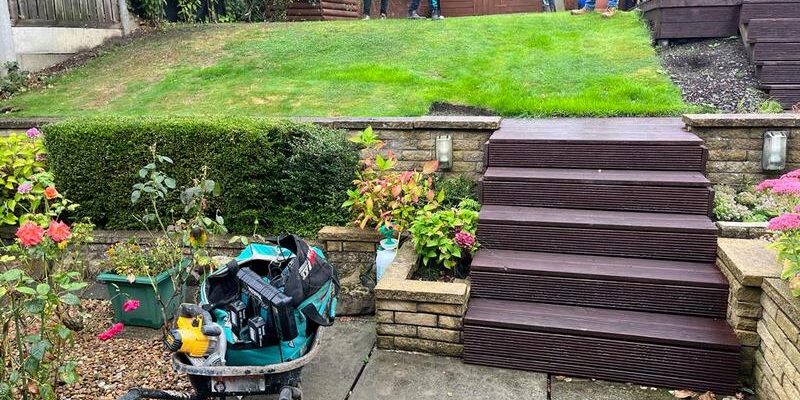
3. Add Garden Steps for Safer Access
Moving between different levels can be one of the biggest challenges in a sloping garden.
Installing properly designed garden steps can make the space easier and safer to navigate, while also creating a more attractive connection between different areas.
Popular materials for outdoor steps include:
- Natural stone
- Porcelain paving
- Concrete
- Brick
- Suitable paving blocks
The right material will depend on the style of your garden, the surrounding surfaces and the level of grip required.
Steps should have consistent dimensions, stable foundations and a suitable slip-resistant finish. Depending on the height and location, handrails or additional safety features may also be appropriate.
Well-positioned steps can become a key part of the overall garden design rather than simply a practical necessity.
4. Create a Level Patio or Seating Area
If your garden slopes away from your home, finding somewhere suitable for outdoor dining or relaxing can be difficult.
A professionally installed patio can provide a stable, level area for garden furniture, barbecues and entertaining.
Depending on the layout of your garden, this might involve constructing a raised patio or creating a level section supported by retaining walls.
There are several paving options worth considering, including porcelain paving, natural stone and concrete paving slabs.
The finished patio should have an appropriate fall for drainage, even when it appears level, so rainwater can flow away rather than collecting on the surface.
A carefully positioned patio can make a significant difference to how often you use your garden.
5. Consider Decking for Uneven Ground
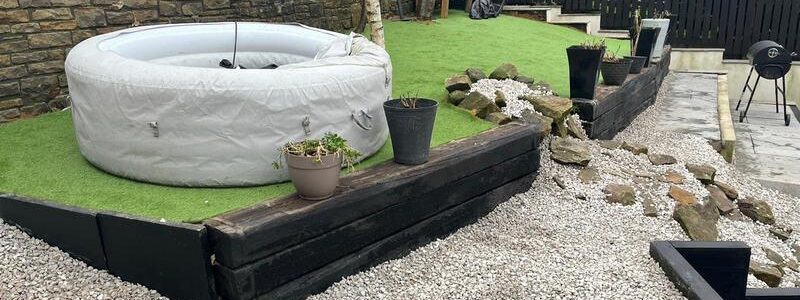
Decking can be another practical solution for gardens with changes in level.
In some situations, a raised decking area can provide a usable platform without the same amount of excavation needed for other landscaping options.
Decking can be particularly effective where a garden slopes down from the rear of a property, creating an outdoor seating area that connects with the house.
Timber and composite decking offer different appearances and maintenance requirements, allowing you to choose an option that complements your garden.
The structure must be designed with suitable foundations, supports and safety features. Raised decking may also require balustrades and consideration of planning rules.
Professional installation helps ensure the finished area is stable, safe and suitable for regular use.

6. Improve Drainage in Your Sloping Garden
Drainage is an important consideration when landscaping a sloping garden.
Rainwater naturally travels downhill, and this can sometimes lead to water collecting at the bottom of a garden, washing soil away or creating muddy patches.
The right drainage solution will depend on the ground conditions, gradient and where water currently flows.
Possible measures include:
- Installing appropriate land drainage systems
- Creating suitable falls on patios and pathways
- Incorporating drainage channels where necessary
- Managing surface water around retaining walls
- Improving ground preparation in regularly waterlogged areas
Retaining walls also need suitable drainage arrangements to prevent excessive water pressure building up behind them.
Addressing drainage during the landscaping process is usually more practical than trying to correct problems after the work has been completed.
7. Use Paths to Connect Different Areas
Garden pathways can help make sloping outdoor spaces easier to navigate.
Rather than walking directly up and down steep grass, a properly designed path can provide a more stable route between different parts of the garden.
For gentler slopes, a winding pathway may offer a more comfortable gradient than a straight route.
On steeper ground, steps or a combination of paths and steps may be more suitable.
Paving materials should be chosen with outdoor grip, drainage and durability in mind.
Paths can also help define planting areas and create a more organised garden layout.
8. Make the Most of Each Garden Level
Once you’ve created practical, accessible areas, consider how you want to use each section of your garden.
A sloping garden can provide opportunities for a more interesting layout than a completely flat space.
For example, the level closest to the house could become a dining patio, while a lower section could provide a lawn or a quiet seating area.
Raised flower beds and planting borders can soften retaining walls and help connect the different levels visually.
You could also incorporate decorative gravel, fencing, lighting or other landscaping features to create a consistent design throughout the garden.
The aim is to make each area feel purposeful while ensuring the different levels work together.
Transform Your Sloping Garden with Meadow Drives
A sloping garden doesn’t have to limit how you enjoy your outdoor space.
With thoughtful landscaping, suitable materials and professional installation, an uneven garden can become a practical and attractive extension of your home.
At Meadow Drives, we provide professional landscaping services, helping homeowners transform outdoor areas with patios, garden steps, retaining walls, pathways and other landscaping improvements.
Whether you want to create a level seating area, improve access between different garden levels or completely redesign your outdoor space, our team can discuss suitable options for your property.
Ready to make more of your sloping garden?
Contact Meadow Drives today to discuss your landscaping ideas and arrange a free, no-obligation quotation.