
Block paving should provide a firm, even surface for vehicles and pedestrians. If sections of a driveway begin to sink, dip or move, it usually indicates a problem beneath the visible blocks.
Sinking may affect one small area or gradually spread across the driveway. Addressing it early can help prevent standing water, loose blocks and further deterioration.
What Does Sinking Block Paving Look Like?
Common signs include:
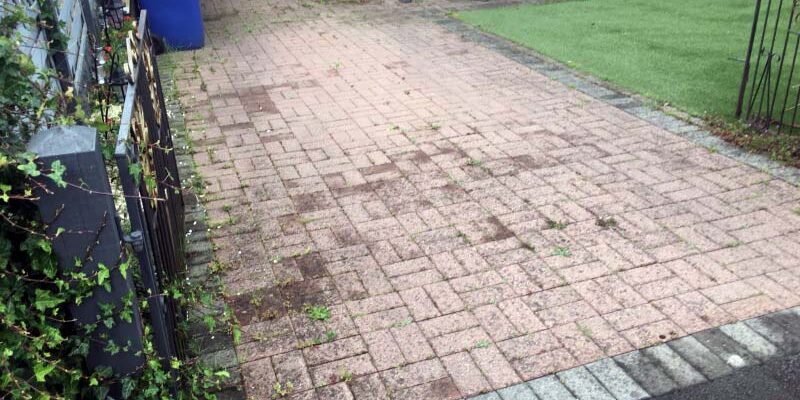
- Individual blocks sitting lower than surrounding paving
- Dips where vehicle tyres regularly pass
- Puddles forming after rainfall
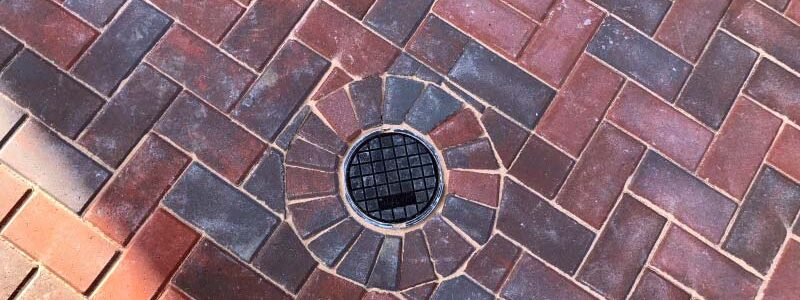
- Uneven areas near drains or inspection covers
- Blocks moving when walked or driven over
- Wider joints developing between blocks
- Edges beginning to spread outwards
Small changes can become more noticeable over time, particularly where vehicles repeatedly use the affected area.
An Inadequate Sub-Base
One of the most common causes of sinking block paving is an inadequate or poorly compacted sub-base.
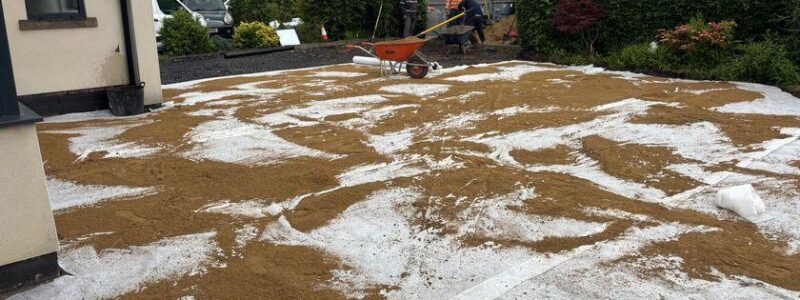
The blocks themselves are only the finished surface. Beneath them should be carefully prepared layers capable of supporting the weight of vehicles.
If the sub-base is too shallow, contains unsuitable material or has not been compacted correctly, it may settle under pressure. This causes the paving above to drop.
A driveway can look perfectly level when first installed but begin to sink months or years later if the preparation underneath was insufficient.
Poorly Compacted Ground
The natural ground beneath a driveway must also be stable.
If paving is installed over recently disturbed soil, old garden areas, filled trenches or soft ground, the soil may continue to settle. This movement can pull the sub-base and paving down with it.
Localised sinking sometimes follows utility work where a trench has been excavated and not compacted adequately before the paving is reinstated.
Water Washing Material Away
Water can weaken the structure beneath block paving. Leaking pipes, damaged drains and poorly controlled surface water may wash away fine material or soften the ground.
This can create voids beneath the paving, causing blocks to sink into the unsupported area.
A dip near a drain, downpipe or water channel should be investigated carefully. Simply lifting and levelling the blocks may not solve the problem if water continues to affect the ground underneath.
Heavy or Repeated Vehicle Loads
Driveways must be constructed for the loads they are expected to carry.
Heavy vans, motorhomes, delivery vehicles or several cars using the same wheel tracks can place significant pressure on the surface. If the underlying construction is not suitable, depressions may develop where tyres repeatedly pass.
The blocks may also sink near the entrance to the driveway, where vehicles brake, turn and apply sideways pressure.
Weak or Missing Edge Restraints
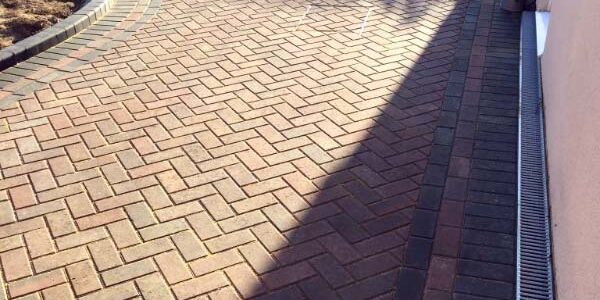
Block paving relies on firm edges to stop the blocks spreading apart. If an edging kerb becomes loose or was not installed correctly, the paving can begin to move sideways.
As the blocks spread, jointing sand is lost and the surface becomes less stable. This movement can contribute to sinking, particularly around the perimeter of the driveway.
Why Puddles Should Not Be Ignored
A sunken area often collects rainwater. Standing water can make the driveway slippery, encourage algae and carry dirt into the paving joints.
During colder weather, repeated freezing and thawing may place additional stress on the affected surface.
Puddles can also indicate that the original falls and levels have changed. The source of the sinking should therefore be identified rather than treating the water alone.
Preventing Future Movement
The most important part of a durable block-paved driveway is the preparation beneath the surface.
A professional installation should consider:
- Ground conditions
- Excavation depth
- Sub-base material and compaction
- Vehicle loads
- Drainage
- Edge restraints
- Finished levels
- Jointing and final compaction
Good preparation takes longer than simply laying the blocks, but it has a major effect on how the driveway performs over time.
Is Your Block Paving Uneven?
At Meadow Drives, we install and improve block-paved driveways across Lancashire. We can assess uneven or sunken paving, identify the likely cause and advise whether a local repair or replacement would be more appropriate.
Contact Meadow Drives to arrange a quotation.