
If you are considering replacing an old, worn or difficult-to-maintain driveway, resin bound surfacing is an option worth looking at.
Resin bound driveways have become increasingly popular with homeowners in Accrington thanks to their smart appearance, smooth finish and relatively low maintenance requirements. They can work equally well outside modern properties and more traditional Lancashire homes, with a wide choice of aggregate colours available to complement the building.
However, as with any driveway surface, the quality of the finished result depends heavily on what happens underneath it.
Here is what homeowners should know before choosing a resin bound driveway in Accrington.
What Is A Resin-Bound Driveway?
A resin bound driveway is created by mixing natural aggregate with a clear resin before the material is laid and hand-trowelled across the prepared surface.
This produces a smooth finish in which the individual stones are securely held together.
It is important not to confuse resin bound with resin bonded surfacing. Although the names sound similar, the installation methods and finished surfaces are different.
With a resin bound system, the aggregate and resin are mixed together before application. This creates the distinctive smooth, seamless appearance associated with modern resin driveways.
Why Are Resin Driveways Popular in Accrington?
One of the main attractions is appearance.
Older concrete, worn tarmac or uneven paving can make the front of a property look tired. A new resin surface provides a clean and consistent finish that can dramatically improve the appearance of the entrance to a home.
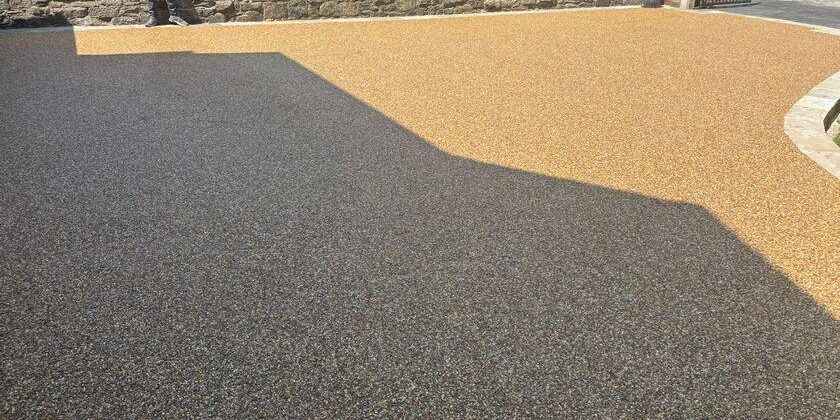
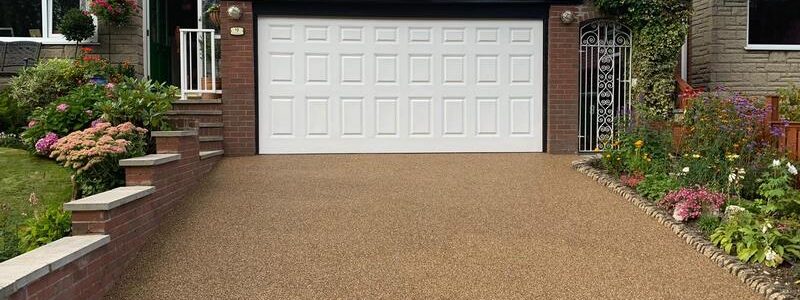
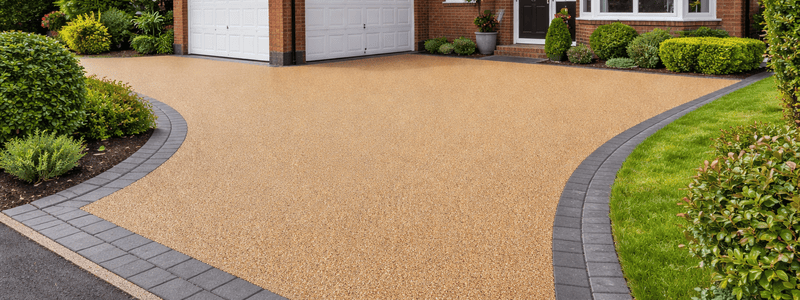
Homeowners can also choose from numerous aggregate colours and blends, ranging from light natural stone shades to darker greys and warmer golden colours.
Borders and edging can then be used to add further definition to the driveway.
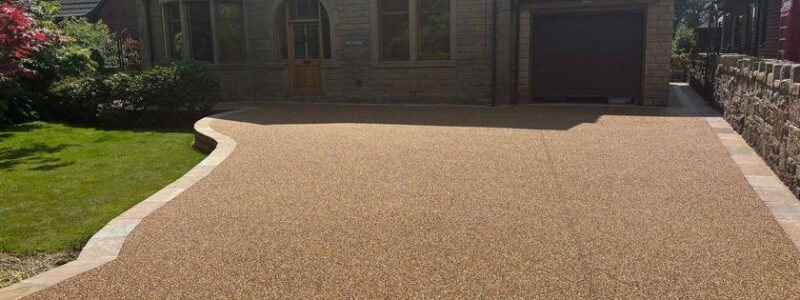
For properties around Accrington, resin can work particularly well alongside traditional stone walls, brickwork and contrasting paving.
Resin Bound Driveways and Drainage
Drainage should always be considered when installing a new driveway.
A correctly specified resin bound system can be permeable, allowing rainwater to pass through the surface rather than simply sitting on top of it.
This can be particularly useful in Lancashire, where prolonged periods of wet weather are hardly unusual.
However, installing resin does not automatically solve every drainage problem. The driveway still needs suitable preparation, levels and a correctly constructed base.
Existing drainage, the slope of the property and where surface water will travel should all be considered before work begins.
If an existing driveway regularly develops large puddles, it is worth identifying the reason before simply installing a new surface over it.
The Base Is Just as Important as the Resin
A resin driveway may only show the decorative surface, but much of its long-term performance depends on the construction underneath.
The condition of the existing driveway needs to be assessed before deciding how the resin should be installed.
Poor preparation can contribute to movement, cracking or uneven areas later.
Depending on the property and existing surface, preparation may involve excavation, installation or repair of the sub-base, creation of appropriate levels, edging and installation of a suitable base layer before the resin is applied.
This is why a proper site inspection is important.
Two driveways of a similar size can require very different levels of groundwork.
Can Resin Be Installed Over an Existing Driveway?
Sometimes.
A suitable existing base may be capable of being used as part of a resin installation, but this should never simply be assumed.
If the existing driveway is cracked, moving, badly sunken or suffering from drainage problems, covering it without addressing those faults could cause problems with the new surface.
The existing construction should therefore be inspected first.
Where necessary, damaged areas can be removed and the driveway rebuilt appropriately before the finished resin surface is installed.
How Much Maintenance Does a Resin Driveway Need?
Resin bound driveways are relatively easy to maintain.
Routine maintenance generally involves keeping the surface clear of leaves, soil and other organic material.
Occasional cleaning can help remove dirt and prevent moss or algae from becoming established, particularly in shaded areas.
Any weeds that appear around edges or through accumulated surface debris should be dealt with before they become established.
As with any driveway, it is also sensible to deal with spills and staining promptly rather than leaving them to build up.
Good maintenance helps preserve both the appearance and performance of the surface.
Does Resin Fade?
High-quality resin systems designed for external use are manufactured to cope with exposure to sunlight and weather.
The exact appearance over time will depend on the materials used, the colour of the aggregate and the conditions surrounding the driveway.
Choosing a good-quality system and having it installed correctly is therefore more important than simply choosing the cheapest quotation.
Is Resin Suitable for Sloping Driveways?
Resin can be used on many sloping driveways, but the individual site needs to be assessed carefully.
The slope affects drainage, preparation and how the finished surface is constructed.
Retaining walls, steps, edging or changes in level may also need to form part of the project.
This is particularly relevant to properties where the front garden or existing driveway is significantly higher or lower than the pavement.
A well-planned driveway should work with the levels of the property rather than simply covering the existing ground.
Choosing the Right Resin Colour
The large selection of aggregate colours is one of the advantages of choosing resin.
Rather than selecting a colour in isolation, it is worth considering the rest of the property.
Look at the colour of:
- Brick or stonework
- Roof tiles
- Window frames and doors
- Boundary walls
- Existing paths
- Paving and steps
A contrasting border can also be used to frame the driveway and create a more defined finish.
For traditional properties, warmer natural stone colours can work particularly well. Grey and charcoal blends are often chosen for more contemporary homes.
How Long Does a Resin Driveway Last?
There is no single lifespan that applies to every driveway.
Traffic levels, groundwork, drainage, materials, installation quality and ongoing maintenance all affect how a surface performs.
The most important thing is to view the driveway as a complete construction rather than just a layer of resin.
A well-prepared base, suitable drainage and professional installation give the finished surface the best opportunity to perform well for many years.
Resin Bound Driveways in Accrington from Meadow Drives
If you are considering a resin bound driveway in Accrington, Meadow Drives can assess your existing driveway and recommend a suitable approach for the property.
From excavation and groundwork to drainage, edging and the finished surface, careful preparation is essential to achieving a driveway that looks good and performs properly.
Contact Meadow Drives today to arrange a free quotation and discuss the options available for your Accrington property.