

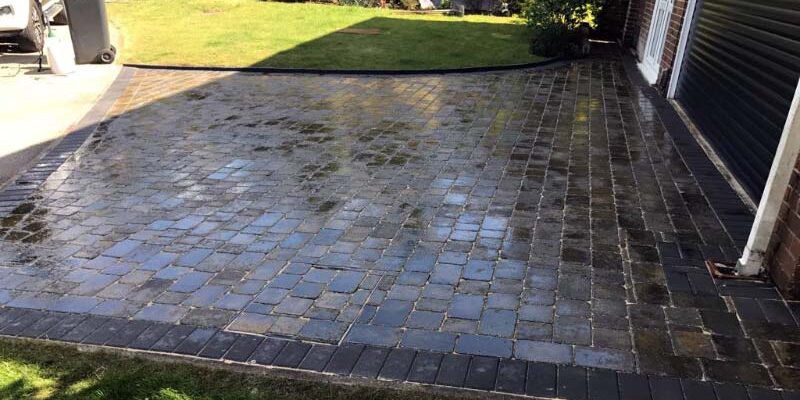
A damaged driveway does not always mean the whole surface needs replacing.
Many common driveway problems can be repaired locally, particularly when they are identified before damage spreads into a larger area.
From sunken block paving and loose edging to standing water and damaged sections of tarmac, there are several reasons a driveway may begin to deteriorate.
For homeowners looking for driveway repairs in Blackburn, the first step is identifying what has caused the problem rather than simply repairing what is visible on the surface.
Here are some of the most common driveway problems and what can be done about them.
1. Sinking Block Paving
Sunken block paving is one of the most noticeable driveway problems.
You may see individual blocks sitting lower than the surrounding surface, wheel-track depressions or larger areas where the paving has begun to dip.
A number of issues can cause block paving to sink, including:
- Poorly compacted sub-base material
- Movement in the ground
- Water washing material away
- Repeated heavy vehicle loads
- Problems around drains or utility trenches
Simply adding sand beneath the affected blocks may improve the appearance temporarily, but it is important to understand why the area moved in the first place.
Where appropriate, the paving can be lifted, the underlying construction repaired or rebuilt and the existing blocks relaid.
2. Loose or Moving Blocks
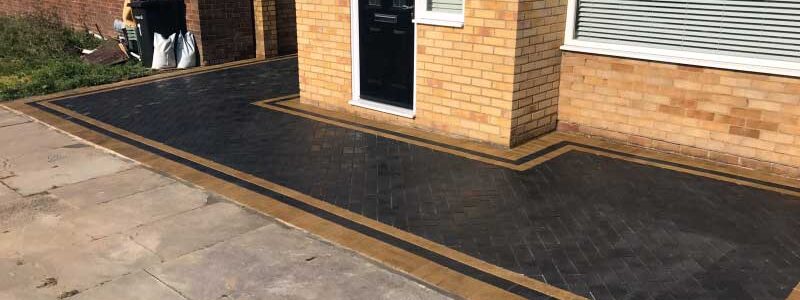
Block paving should feel firm when walked or driven over.
If blocks are moving, rocking or spreading apart, it may indicate a problem with jointing sand, edge restraints or the layers beneath the paving.
Movement often becomes more noticeable around the edges of a driveway or in areas where vehicles regularly turn.
Repairing the problem may involve lifting the affected section, correcting the bedding layer and replacing or strengthening the edge restraint before relaying and compacting the blocks.
Leaving moving blocks untreated can allow the affected area to become progressively larger.
3. Puddles and Standing Water
A puddle that appears every time it rains is more than an inconvenience.
Standing water may indicate:
- A sunken section of driveway
- Incorrect levels or falls
- A blocked drainage channel
- Inadequate drainage
- Movement beneath the surface
The correct repair depends on the cause.
A localised dip may be repairable by lifting and resetting the affected paving. In other situations, additional drainage or alterations to the levels may be required.
Persistent drainage problems should be investigated rather than simply ignored, as water can contribute to further deterioration.
4. Cracked Tarmac
Tarmac is durable, but cracks can develop as a driveway ages.
Small cracks may be caused by normal wear, movement or repeated loading.
Larger cracks, depressions or breaking around the edges may point to a more significant issue underneath.
The appropriate repair depends on the size and condition of the damaged area.
Localised sections can sometimes be cut out and repaired. Where cracking is widespread or the base has failed across a large area, resurfacing or replacement may offer a better long-term solution.
5. Damaged Driveway Edges
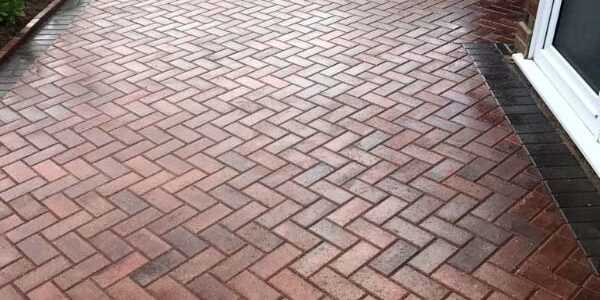
Driveway edges play both a visual and structural role.
On block paving in particular, edge restraints help keep the surface contained.
If these become loose, broken or displaced, blocks can begin spreading outwards.
The joints may open, sand can escape and previously level paving may start moving.
Repairing damaged edging early can prevent a relatively small problem from affecting a much larger section of driveway.
6. Weeds Between Block Paving
A few weeds do not necessarily mean a block paved driveway is failing.
Weed seeds commonly settle into dirt and organic material that collects within the paving joints.
However, heavy weed growth can be associated with neglected joints and loss of kiln-dried sand.
A maintenance treatment may include removing weeds and moss, cleaning the paving and replacing jointing sand.
If blocks have moved or joints have become unusually wide, the driveway should also be checked for underlying movement.
7. Moss and Algae
Blackburn and the wider Lancashire area receive plenty of wet weather, and damp or shaded driveways can develop moss, algae and other organic growth.
Apart from making the paving look dirty, this can make some surfaces slippery.
Regular sweeping helps prevent leaves and soil from remaining on the surface, while periodic cleaning can remove established growth.
If water continually sits in one area, however, the drainage problem should be resolved rather than relying solely on repeated cleaning.
8. Cracked or Broken Paving Blocks
One advantage of block paving is that individual blocks can often be replaced without renewing the entire driveway.
Damage can occur through impact, unusually heavy loads or general deterioration.
Where matching paving is available, broken blocks can usually be removed and replaced.
It is also worth inspecting the surrounding area to ensure the breakage has not been caused by movement underneath the surface.
9. Sunken Areas Around Drains and Covers
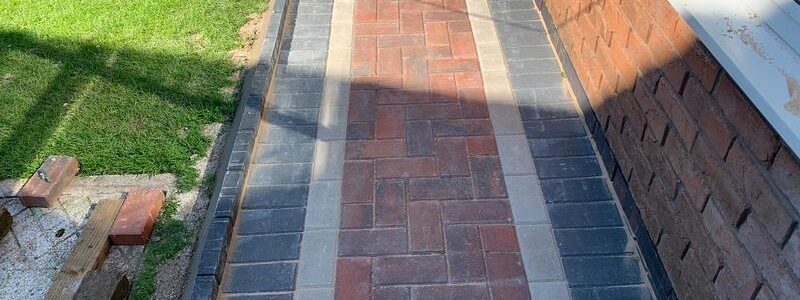
The areas surrounding drainage channels, manholes and inspection covers can be particularly prone to movement.
If the material surrounding these features was not compacted sufficiently, settlement can occur over time.
This may leave a visible depression and cause rainwater to collect around the cover.
Repair usually involves lifting the surrounding paving, reinstating a firm base and resetting the surface to the correct level.
If there are signs of leaking or damaged drainage underground, that issue should be investigated as part of the work.
10. Driveway Damage Caused by Tree Roots
Trees and large shrubs close to a driveway can occasionally contribute to movement.
Roots may affect paving directly or alter the surrounding ground as they grow.
The correct approach needs to take both the driveway and the health and position of the tree into consideration.
Simply cutting roots without proper consideration is not always appropriate.
Where tree-related movement is suspected, the site should be assessed before deciding how to rebuild the affected section.
Repair or Replace: Which Is Better?
Whether a driveway should be repaired or replaced depends on how widespread the problem is.
A repair may make sense when:
- Damage is limited to a small area
- Most of the driveway remains stable
- Suitable replacement materials are available
- The underlying problem can be corrected locally
Replacement may be more appropriate when:
- Large parts of the driveway are sinking
- The sub-base is inadequate throughout
- There are extensive drainage problems
- The surface is badly deteriorated
- Repeated previous repairs have failed
- You also want to change the layout or driveway material
A site inspection makes it much easier to determine which approach represents better value.
Why Finding the Cause Matters
A successful driveway repair should address more than the visible damage.
For example, relaying sunken blocks without addressing the failed base underneath them is likely to result in the same problem returning.
Likewise, filling a depression without dealing with ongoing water movement may only provide a temporary improvement.
A professional assessment should consider the complete driveway, including:
- Sub-base condition
- Surface levels
- Drainage
- Vehicle loading
- Edge restraints
- Existing materials
- Ground conditions
This helps determine why the damage occurred and how best to prevent it happening again.
Driveway Repairs in Blackburn from Meadow Drives
If your driveway is sinking, cracking, holding water or showing other signs of wear, Meadow Drives can assess the problem and recommend the most suitable solution.
Depending on the condition of the driveway, this may involve repairing a localised section, improving drainage or discussing replacement where the existing construction has reached the end of its useful life.
We work with a range of driveway surfaces and can advise on the best approach for your property.
If you need driveway repairs in Blackburn, contact Meadow Drives today to arrange a free quotation.
